|
Published by
|

|
|
|
|
|
|
|
|
|
|
|
|
What Grease Color Can Tell You
|
|
|
|
A grease's color has the ability to provide important information. Watch this video to discover why you should never use color alone to confirm the type of grease and how you can protect your machines from the potential of grease cross-contamination.
|
|
|
|
|
|
|
|
|
|
|
|
|
|
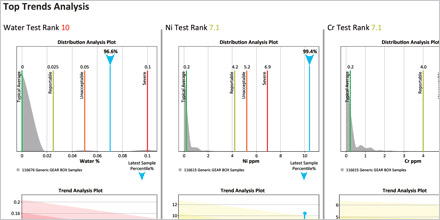
Every year, industrial plants pay millions of dollars for commercial laboratories to perform analysis on used and new oil samples. Unfortunately, a majority of the plant personnel who receive these lab reports do not understand the basics of how to interpret them.
|
|
|
|
|
|
|
|
|
|
|
|
|
|
|
|
|
|
|
There's a reason your oil container has an expiration date. Particles and dirt compromise an oil's benefits, but so does age. Additives separate within oil, viscosity changes, etc. Learn the facts in Oil Analysis II.
|
|
|
|
|
|
|
|
|
|
|
|
|
|
|
|
|
|
|
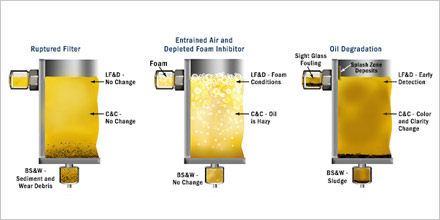
There are three important inspection zones in common oil reservoirs and sumps. These zones have a story to tell about your oil and machine. They might be difficult to reach, but difficult does not mean impossible and certainly doesn't mean unnecessary.
|
|
|
|
|
|
|
|
|
|
|
|
|
|
|
|
|
|
|
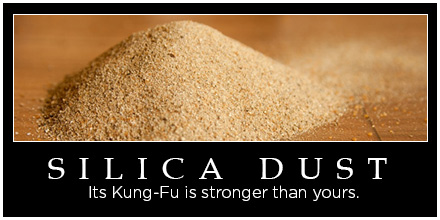
Silica dust is a common contaminant, yet many lubrication professionals give it little thought. These particles can quickly cause significant wear. Learn how to keep them out in Noria's Machinery Lubrication I (ML I) course.
|
|
|
|
|
|
|
|
|
|
|
|
|
|
|
|
|
|
|
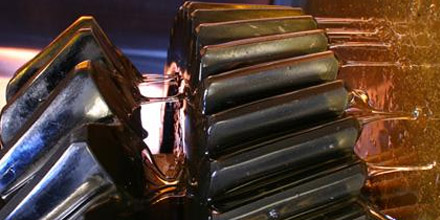
Gear oil viscosity typically trends downward as the oil ages. However, every so often a slight spike in viscosity may be seen in your oil analysis reports. A difference of a few centistokes could be due to inconsistencies in the lab or personnel running the sample. A greater increase in viscosity may indicate lubricant mixing.
|
|
|
|
|
|
|
|
|
|
|
|
|
|
|
|
|
|
|
Varnish can be devastating to certain machines that are prone to its formation. Varnish has too often been the cause of costly downtime and unplanned outages. Testing for varnish potential in a lubricating oil allows you to keep track of the stages of varnish formation so it can be mitigated early.
|
|
|
|
|
|
|
|
|
|
|
|
|
|
|
|
|
Machinery Lubrication: Archive
|
|
|
|
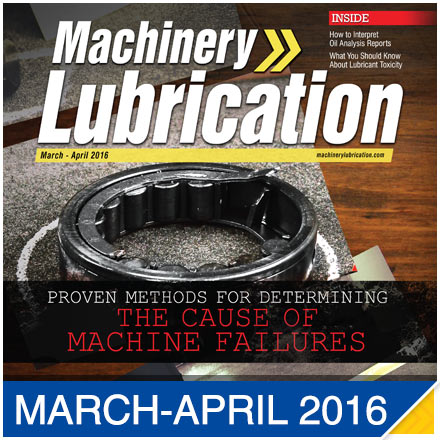
Did you miss an issue? You can flip through our interactive digital editions online
and sign up to have this free publication delivered to your inbox right on our website.
|
|
|
|
|
|
|
|
|
|
|
|
|
|
|
|
|
Published by
|
|
|
|
|
|
|
|